Old Money Men’s Haircuts: Classy & Timeless Styles 2026
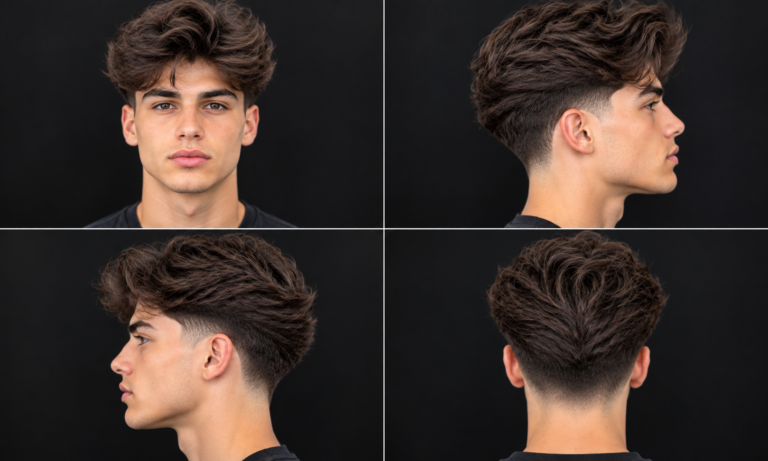
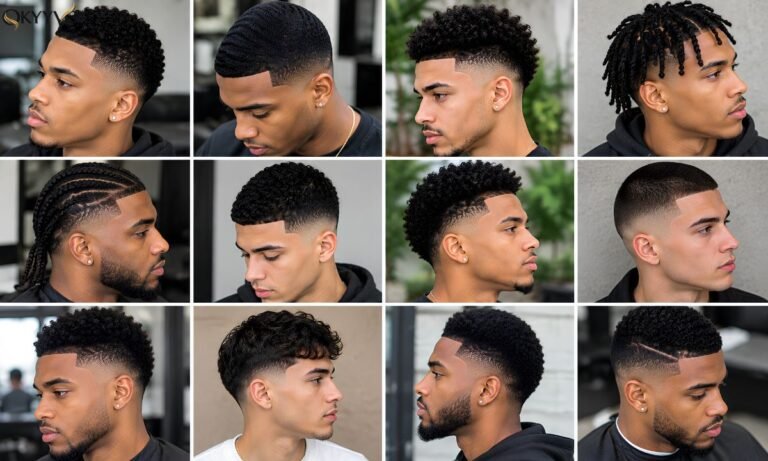
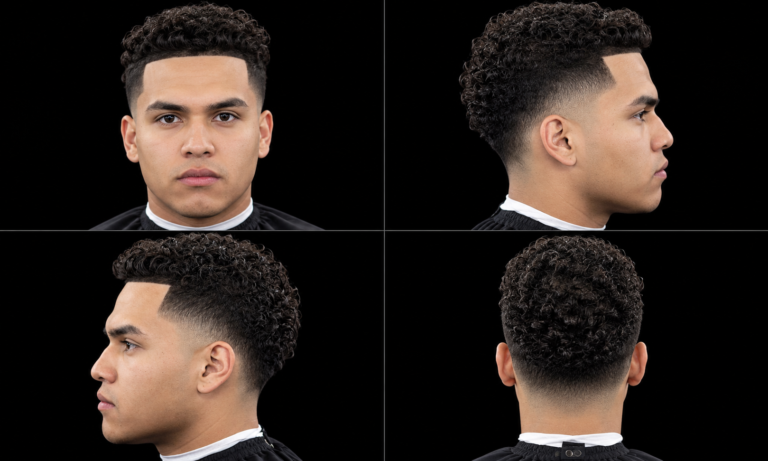
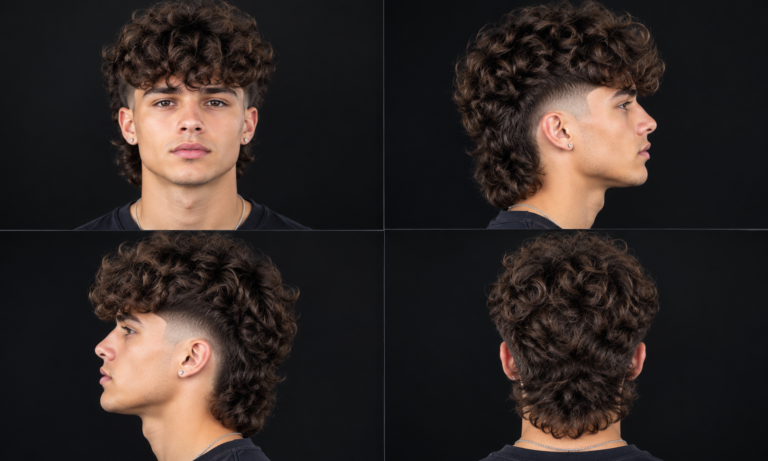
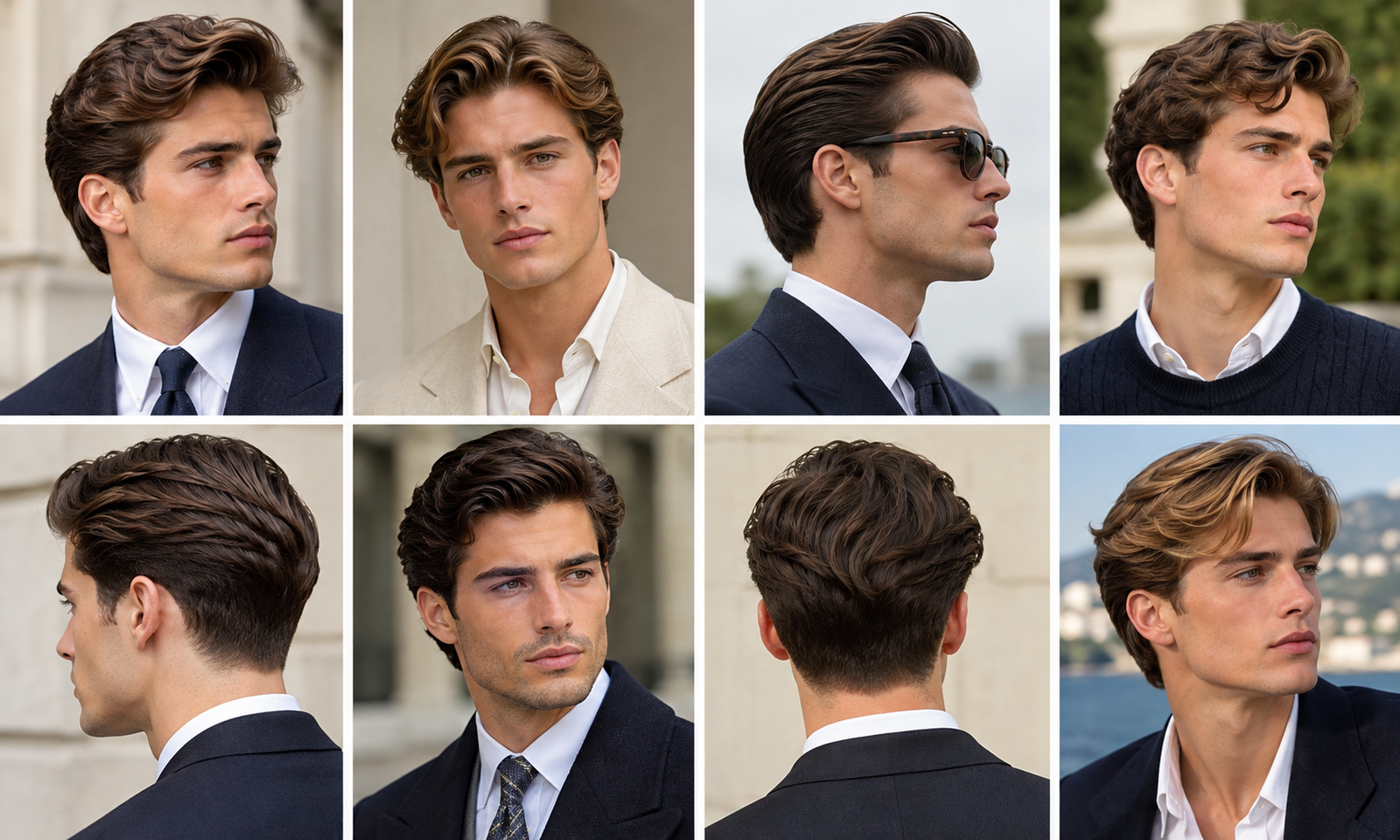
An old money haircut is a clean, classic cut that looks put together without looking like you tried too hard. Think tailored, not trendy. These cuts have been worn by bankers, sailing club members, and prep school kids for decades, and they still work today because they never chase a fad. If you want to look like you inherited a trust fund instead of a TikTok trend, this guide has you covered.
We’re going to walk through 20 old money hairstyles for men, how to pick the right one for your face and hair, and exactly what to say to your barber so you don’t walk out with the wrong cut. We’ll also cover guard numbers, real price ranges, and maintenance schedules most articles skip.
Top Old Money Hairstyles for Men
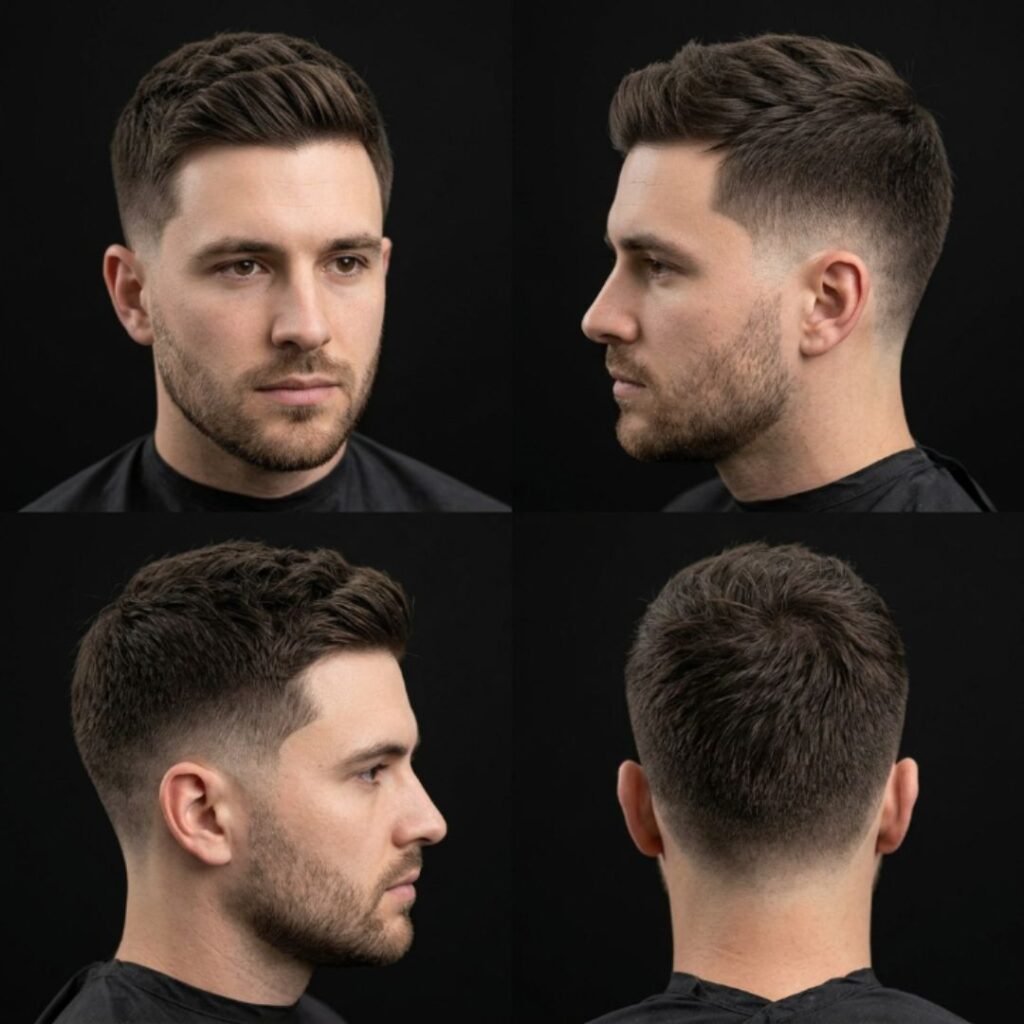
The old money look leans on a few core traits: short sides, some length on top, a hard part or natural fall, and almost zero product shine. Most of these cuts cost between $25 and $65 at a regular barbershop, or $80 to $150 at a higher-end salon in a big city. Expect to visit your barber every 3 to 4 weeks to keep the shape sharp.
Discover Your Best Look
Not every old money haircut works the same way on every guy. Your hair length, face, age, and even gender change which version fits best. Here’s a quick breakdown before we dig into the full list of 20 cuts.
Old money medium hairstyles male
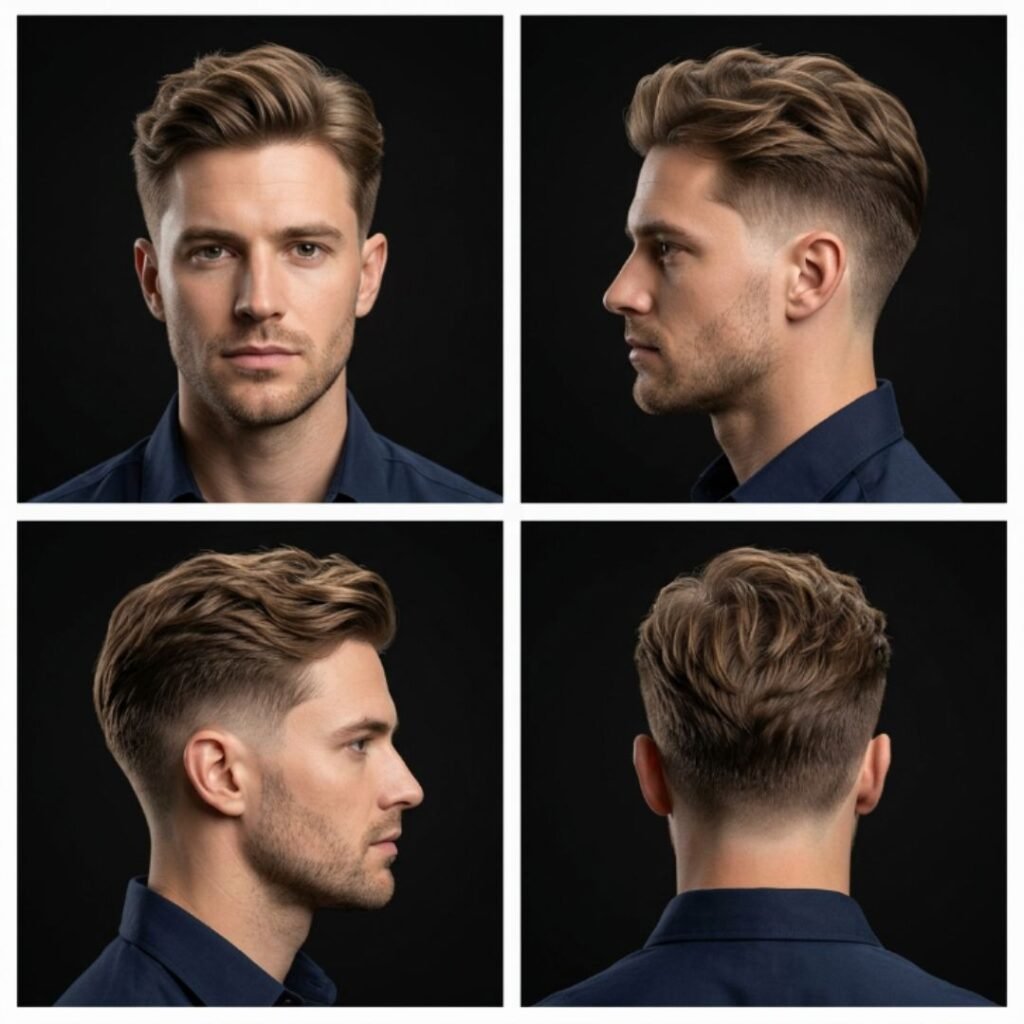
Medium length old money cuts keep 2 to 4 inches on top with a tight taper on the sides. This length gives you enough hair to sweep to the side or push straight back with a comb. Guys with wavy or thick hair do best here since the extra length lets natural texture show without looking messy. Get a trim every 4 weeks to stop the sides from growing out and losing that sharp line.
Also Read This Style: 8 Guard Haircut: Clean & Stylish Men’s Buzz Cut 2026
Old money long hairstyles Male
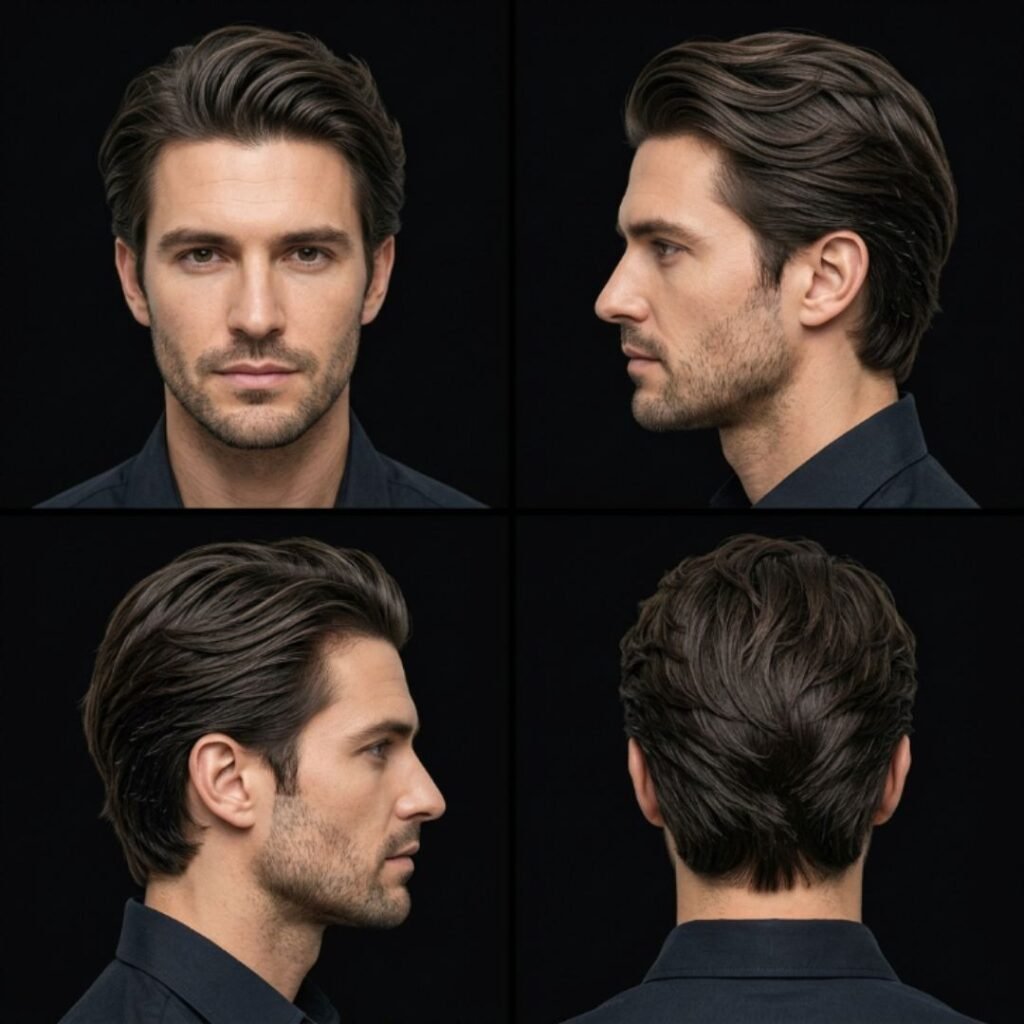
Long old money hairstyles keep 4 inches or more on top while the sides stay short or fade into a low taper. This works well for curly or thick hair types that hold a shape without daily styling. A curtain cut or a swept-back style are the two most common long versions in this category. Book a trim every 6 to 8 weeks since the length grows out slower on top than short cuts do.
old money hairstyles female
Women borrow from the old money playbook with a low, sleek bun, a soft side part, or a blunt bob with no layers. The goal is the same as the men’s version: neat, controlled, and quiet instead of loud. A middle part with straight, glossy hair reads as old money more than heavy curls or bold color. Keep ends trimmed every 8 to 10 weeks to avoid split ends ruining the sleek finish.
Old Money haircut teen boy
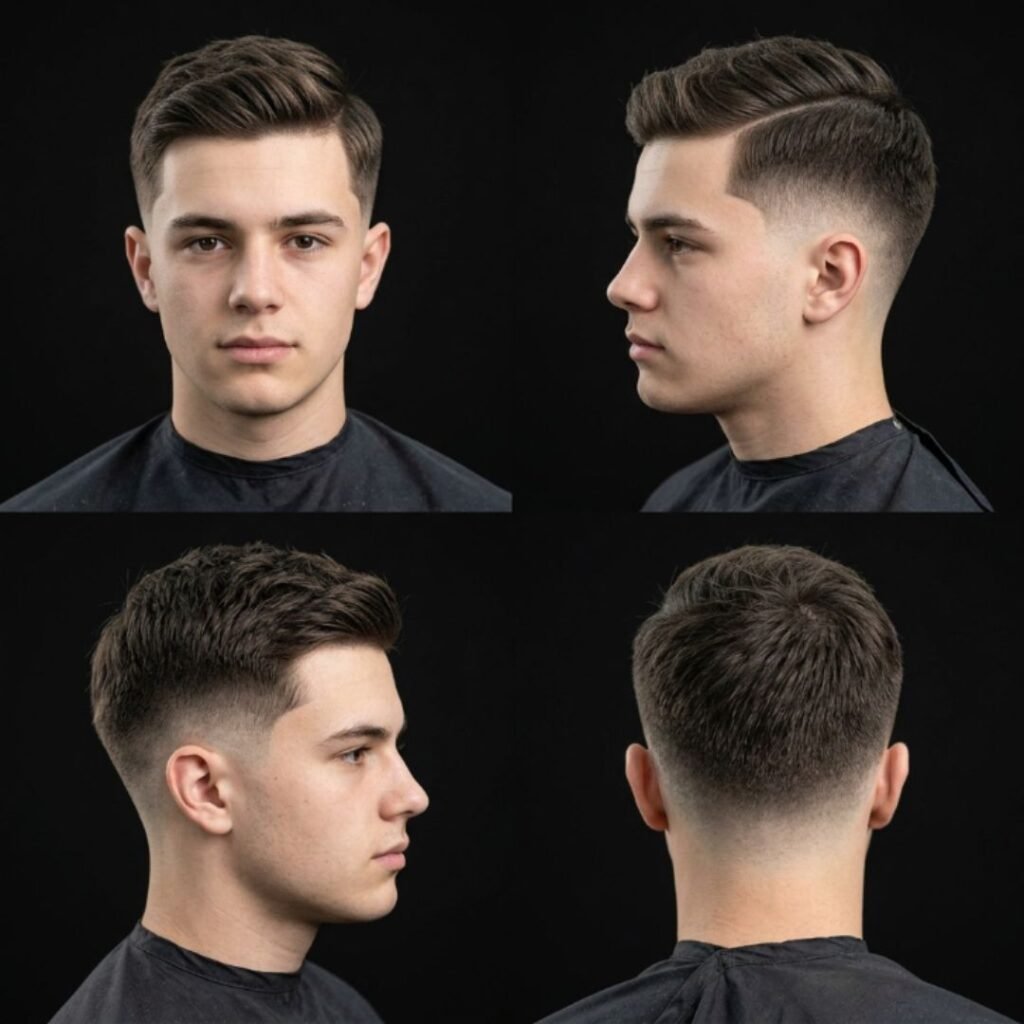
For teen boys, a classic taper or a side part with a low fade gives that clean prep school look without being too formal. Ask for a number 2 or 3 guard on the sides and leave 2 to 3 inches on top for styling. This cut suits school dress codes and grows out neatly between cuts. Plan on a trim every 3 to 4 weeks since teen hair tends to grow fast.
Old money short hairstyles male
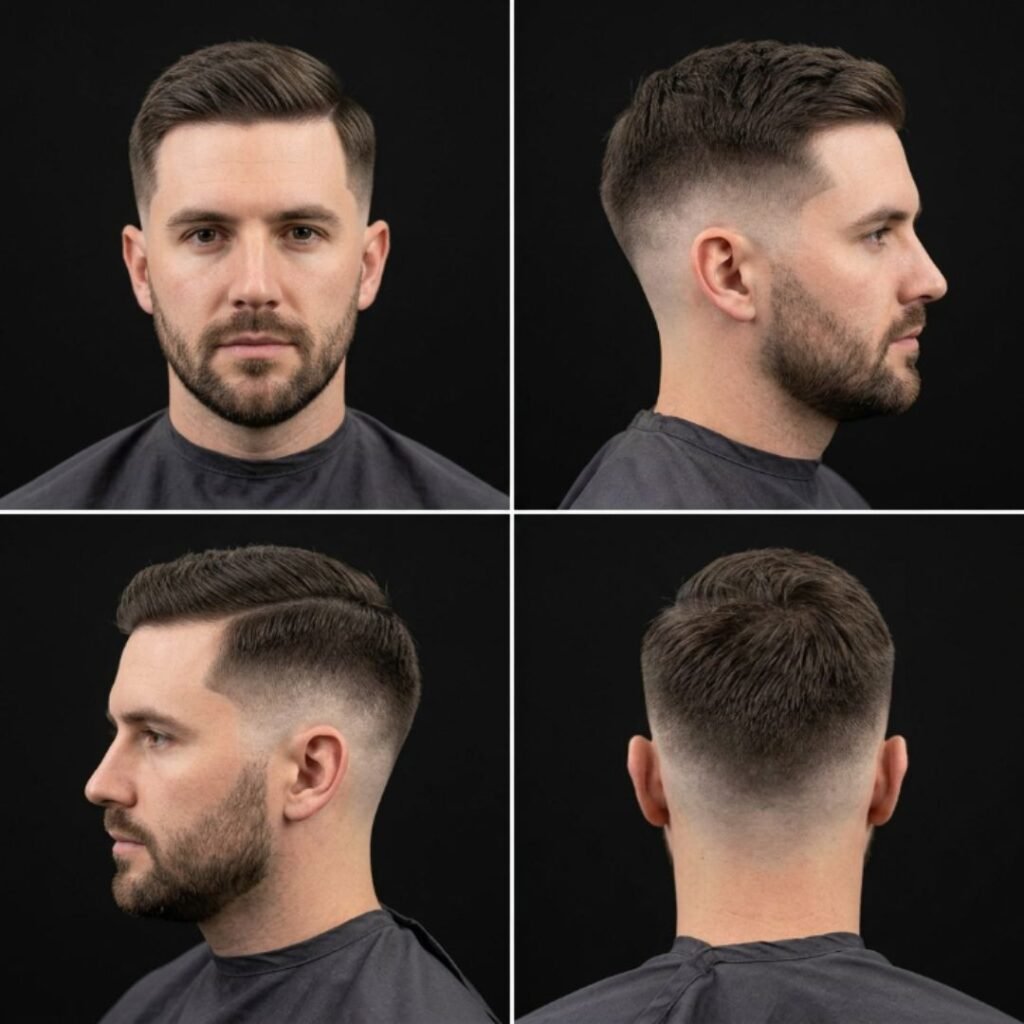
Short old money cuts, like the classic crew cut or Caesar cut, use a number 2 to 4 guard on the sides and top. This version suits guys with fine or thinning hair since shorter length hides gaps better than longer styles. It’s also the lowest-maintenance option on this list, needing almost no product. A monthly trim keeps the shape from looking overgrown.
Now let’s get into the full list of 20 old money hairstyles for men.
Classic Taper
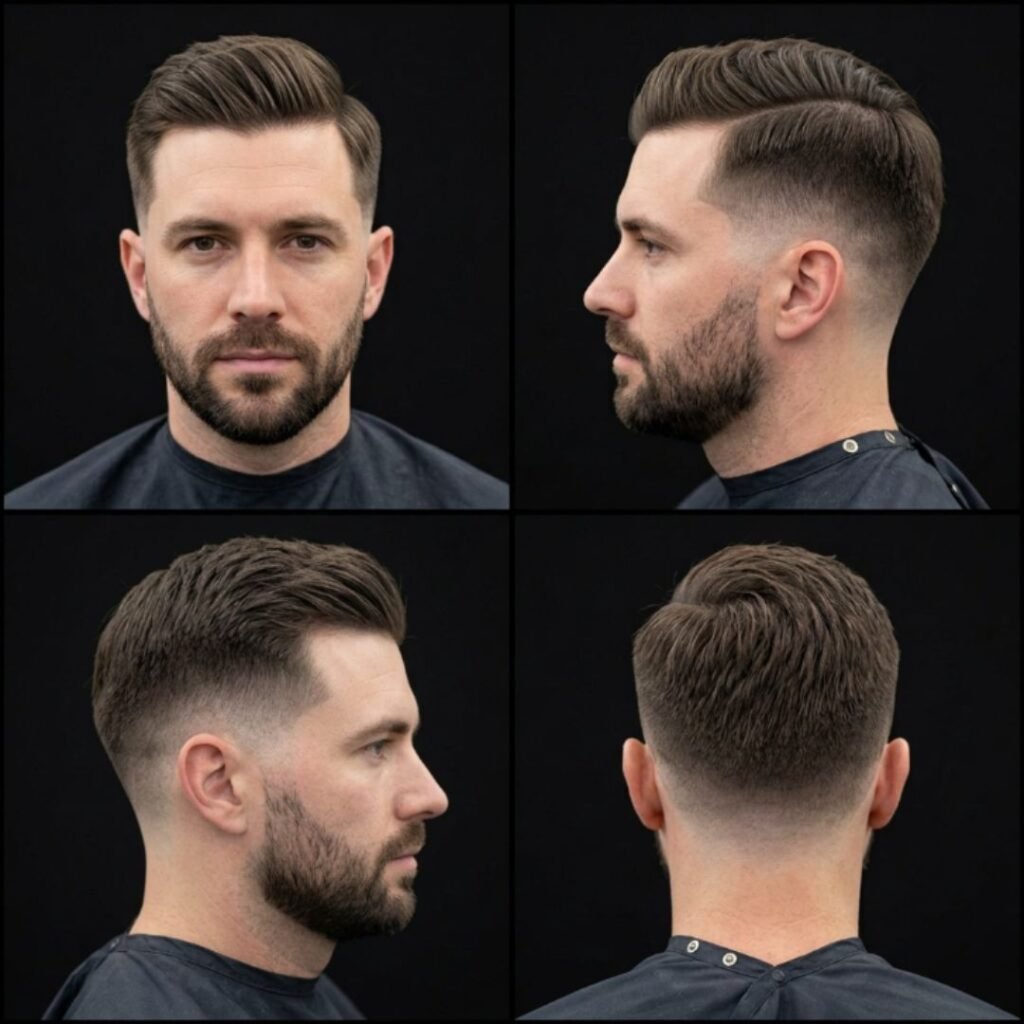
The classic taper is the backbone of nearly every old money haircut on this list. It keeps hair short at the neckline and gradually gets longer moving up toward the crown. This cut suits almost every face shape and hair type, which is why barbers recommend it as a safe starting point. Ask for a number 2 guard on the sides blending into scissor-cut length on top, usually 2 to 3 inches. Comb it with a light pomade every morning and get it re-tapered every 3 weeks.
French Crop
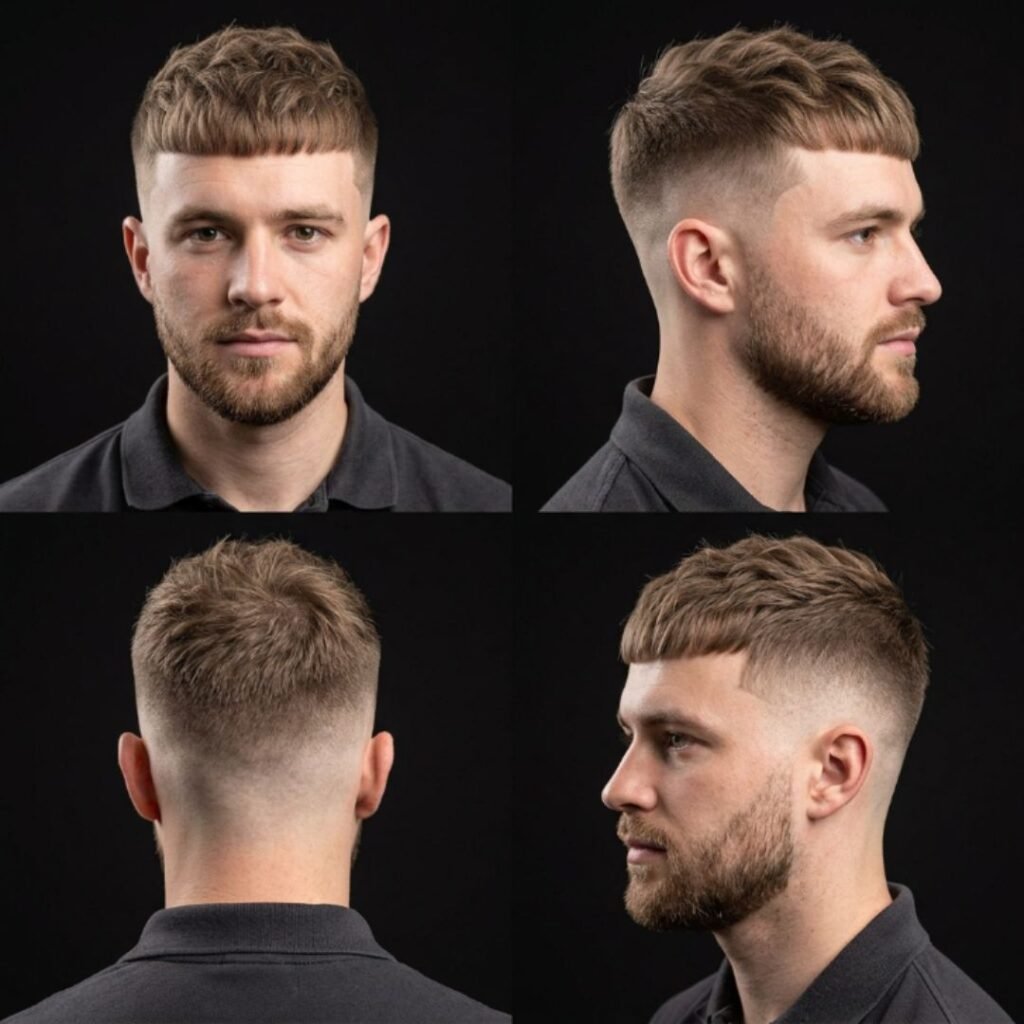
A French crop pairs a short, textured fringe with tight sides, usually faded or tapered. This one stands out because the fringe sits low on the forehead instead of swept back like most old money cuts. It works best on straight to slightly wavy hair and suits guys with a rounder or square face shape. Tell your barber you want a number 1 or 2 fade with 2 inches left on top for texture. Style it with a small amount of matte clay pushed forward, and trim every 3 to 4 weeks to keep the fringe sharp.
Undercut
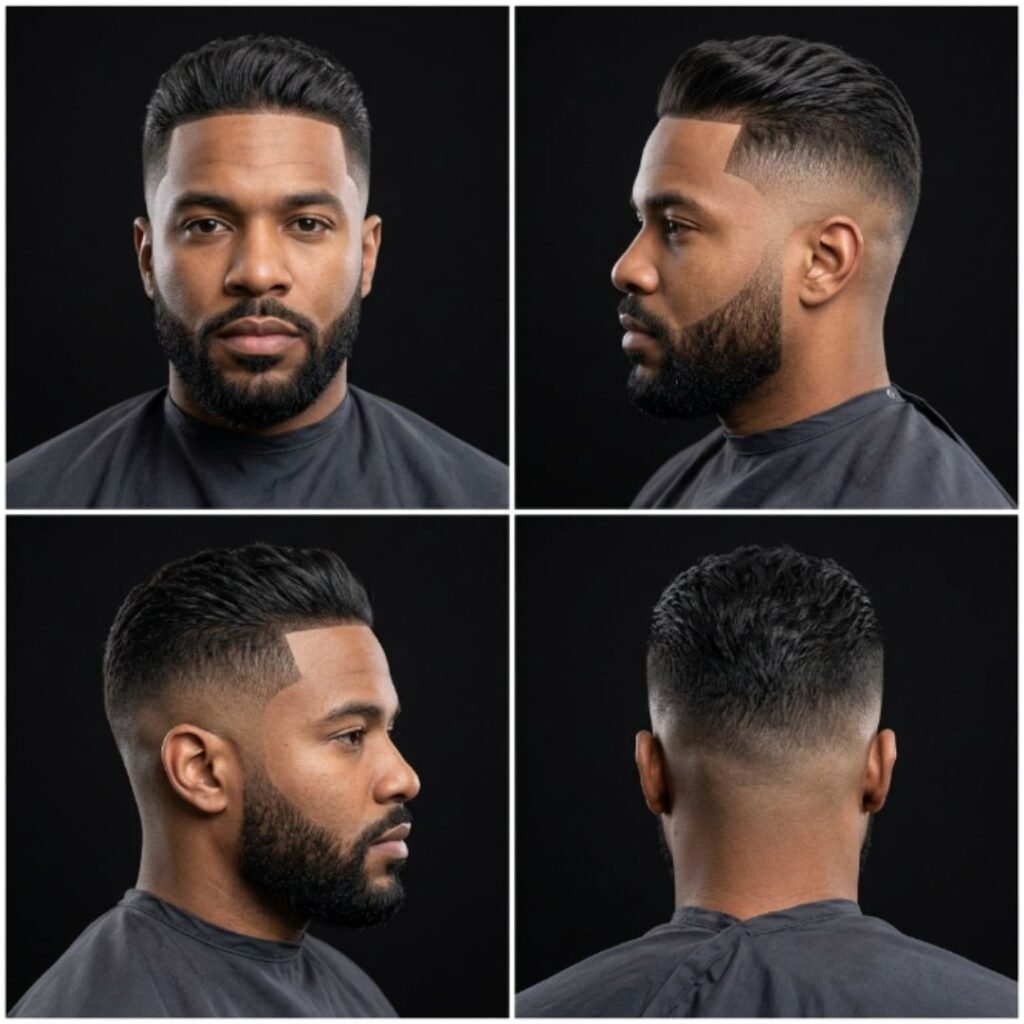
The undercut disconnects short, shaved sides from noticeably longer hair on top, creating sharp contrast. Unlike most old money cuts, this one plays with a bolder line instead of a smooth blend. Guys with thick, straight hair get the cleanest results since the top holds its shape and swept-back style. Ask for a 0 or 1 guard on the sides with a hard part line, leaving 3 or more inches on top. Use a strong-hold pomade daily and touch up the sides every 2 to 3 weeks since undercuts grow out fast and lose their sharp edge.
Ivy League Cut
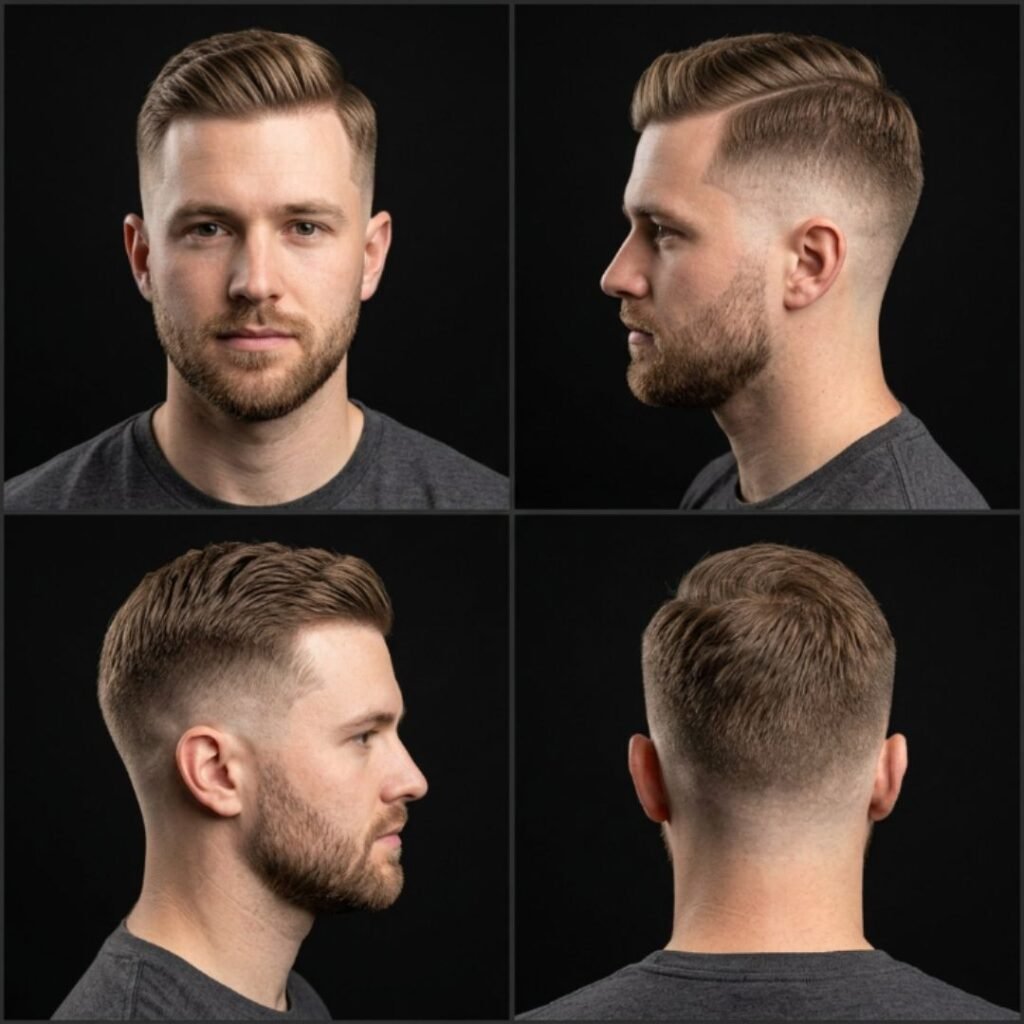
The Ivy League cut is basically a longer, more relaxed version of a crew cut, named after the East Coast colleges where it became a uniform. It sits between short and medium length, giving you enough hair on top to part or brush to one side. This suits guys who want an easy, no-fuss style that still looks sharp for work. Ask for a number 3 guard on the sides with 1.5 to 2 inches left on top. A light comb-through with pomade in the morning is all it needs, and it holds its shape for about 4 weeks between cuts.
Classic Slick Back
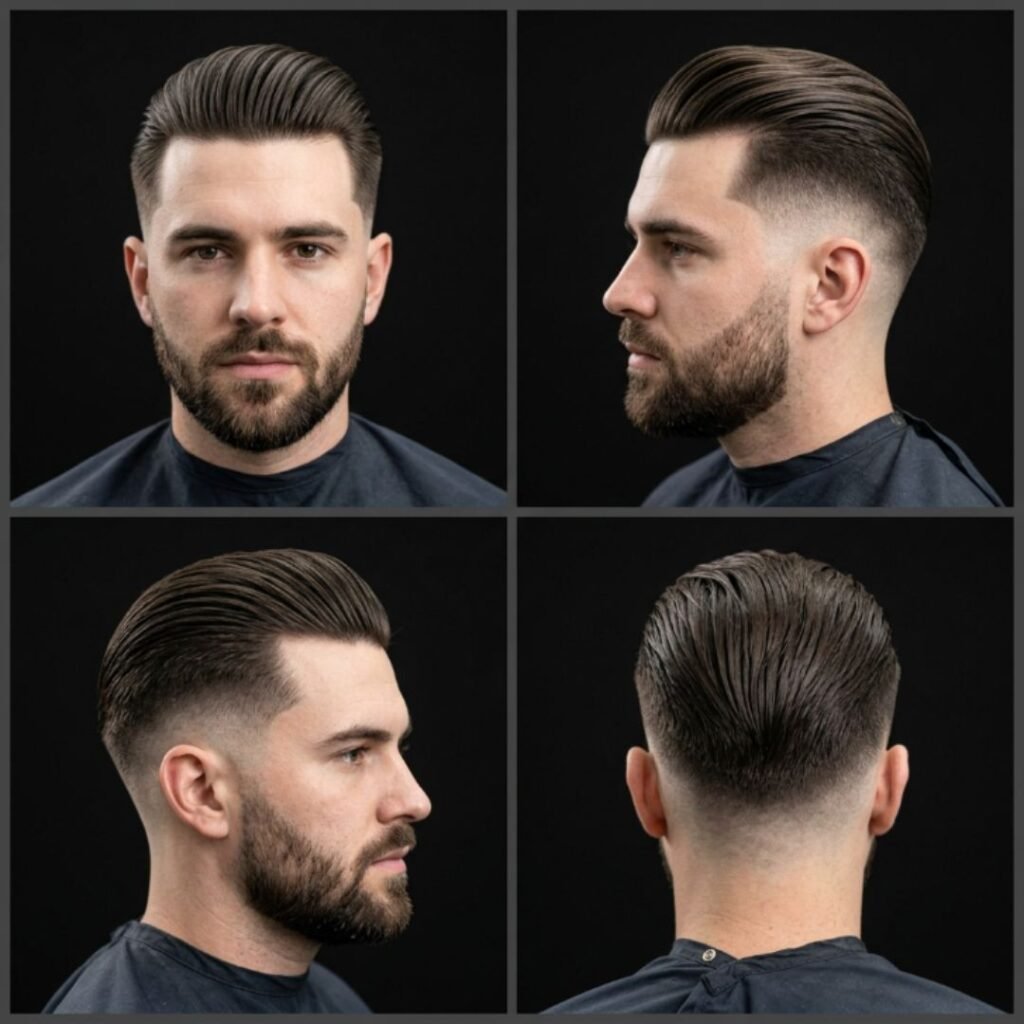
The classic slick back takes longer top hair and combs it straight back off the forehead using pomade or gel. This style reads more formal than most old money cuts, making it a go-to for weddings or work events. It suits straight or wavy hair best, since curly hair tends to fight the slicked shape. Keep the sides tapered with a number 2 guard and leave at least 3 inches on top for the comb-back to work. Reapply a strong-hold, high-shine pomade daily, and expect a trim every 4 to 5 weeks.
Classic Pompadour
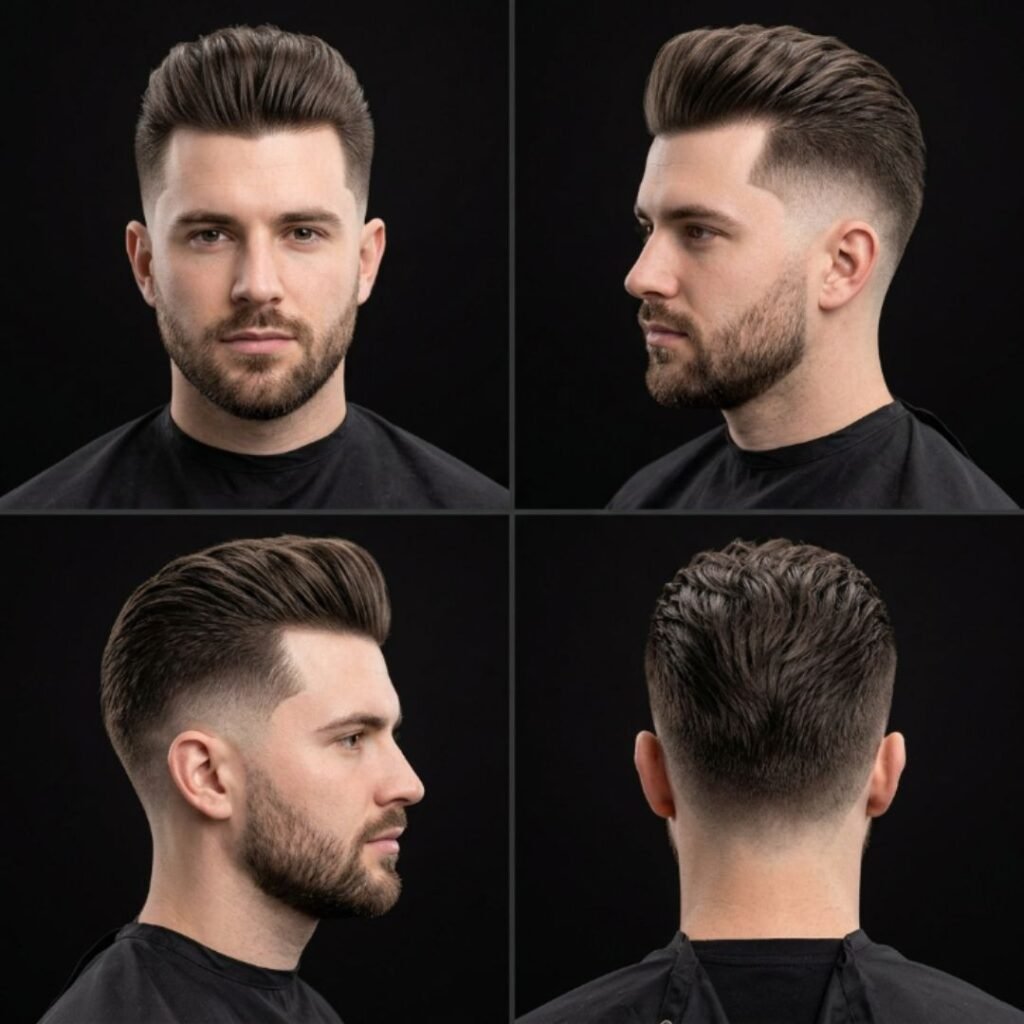
The pompadour builds height at the front by combing top hair up and back, then letting it fall into a wave. This is one of the more dramatic old money looks, giving off a confident, old Hollywood feel. It works best on thick or medium-density hair, since fine hair struggles to hold the volume. Sides get tapered short, usually a number 2, while the top stays 4 or more inches long at the front. Use a blow dryer with a round brush to build the base, then set it with a medium-hold pomade, and trim every 5 to 6 weeks.
Layered Cut
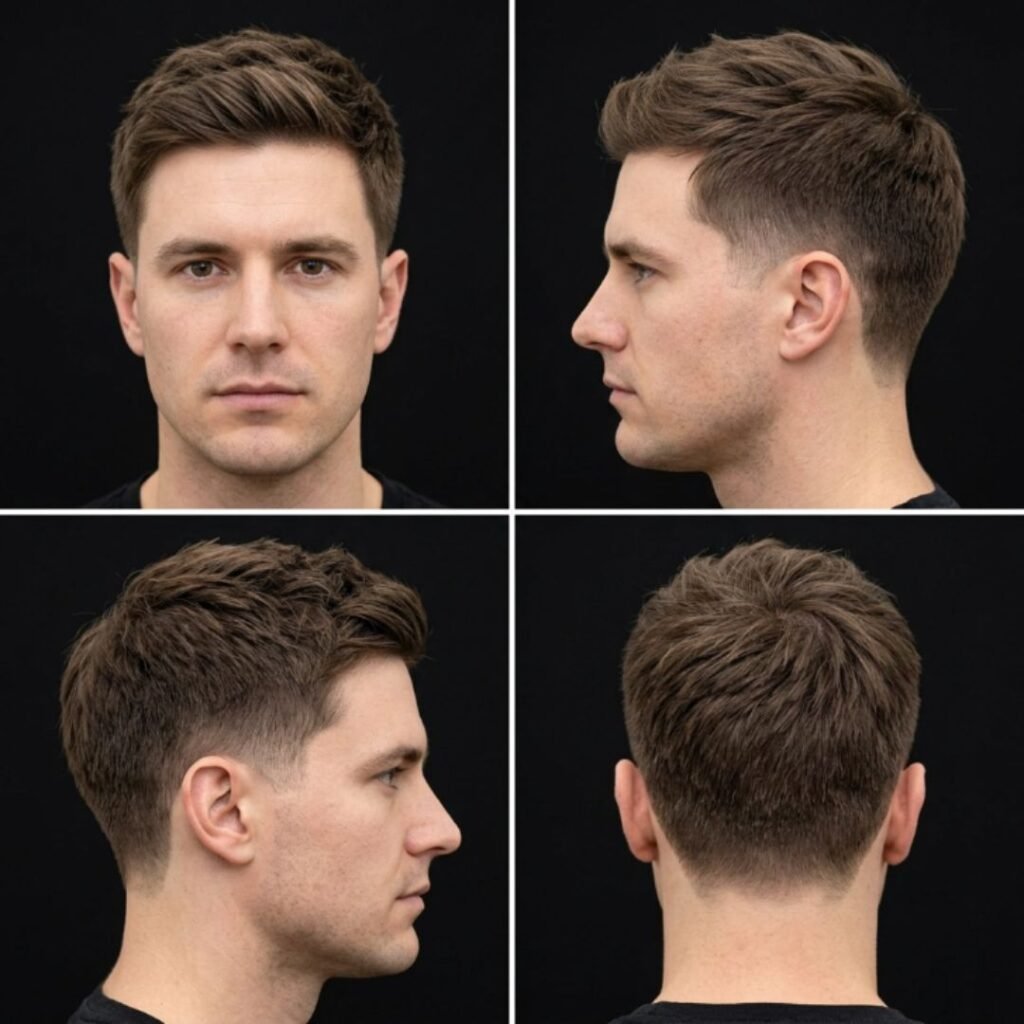
The layered cut uses different hair lengths throughout to add movement instead of one flat length on top. This makes it feel more relaxed than sharp, tapered cuts, giving a lived-in old money vibe. It suits wavy or curly hair types since the layers work with natural texture instead of against it. Barbers usually cut layers starting around 3 inches at the crown, tapering down at the sides with scissors instead of clippers. A light texturizing spray and air-drying is enough styling, and layers hold shape well for 6 weeks.
Caesar Cut
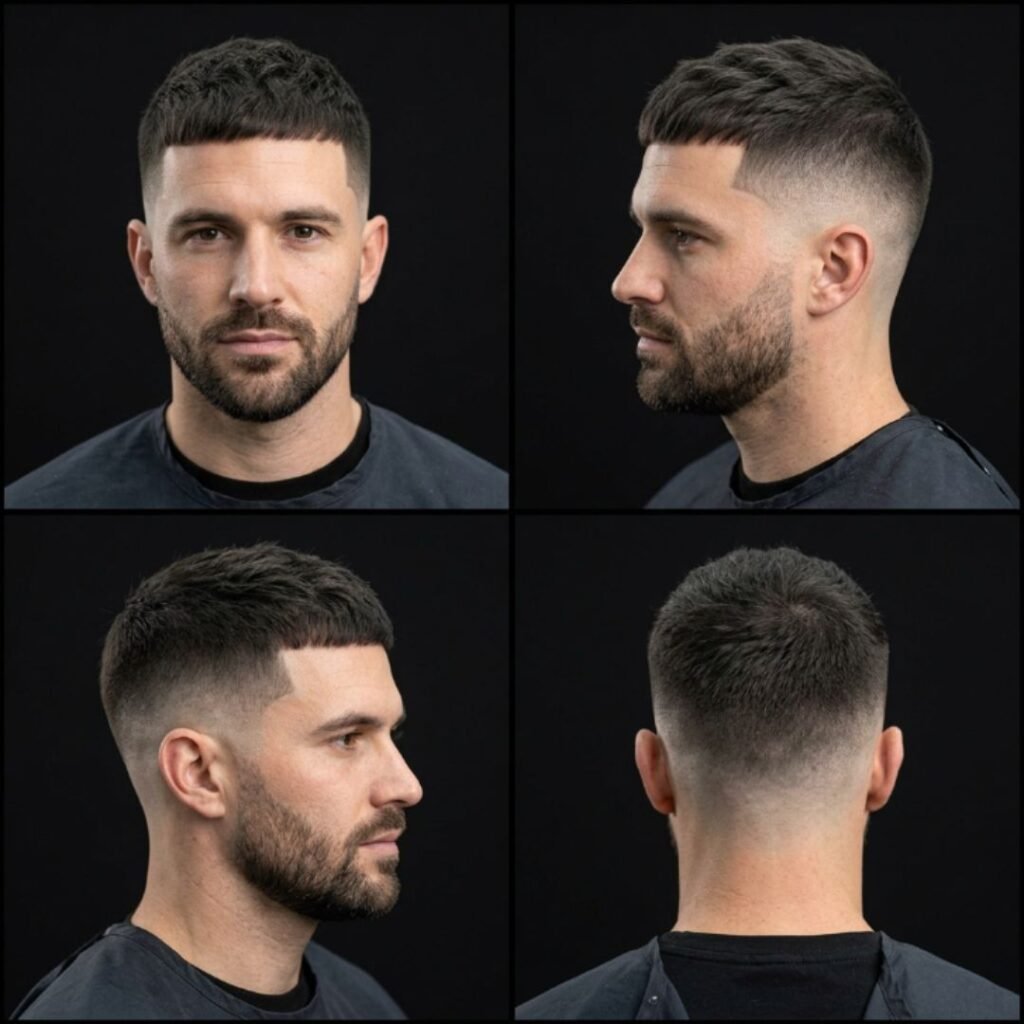
The Caesar cut keeps hair short and even all over, with a horizontal fringe brushed forward instead of to the side. Unlike swept-back old money styles, this one sits low and close to the head, named after Julius Caesar’s hairstyle. It works well on receding hairlines since the forward fringe covers the front hairline naturally. Ask for a number 2 guard all over with the fringe left slightly longer, about 1 inch. It needs no daily styling beyond a quick towel-dry, and a trim every 3 weeks keeps the length even.
Classic Quiff
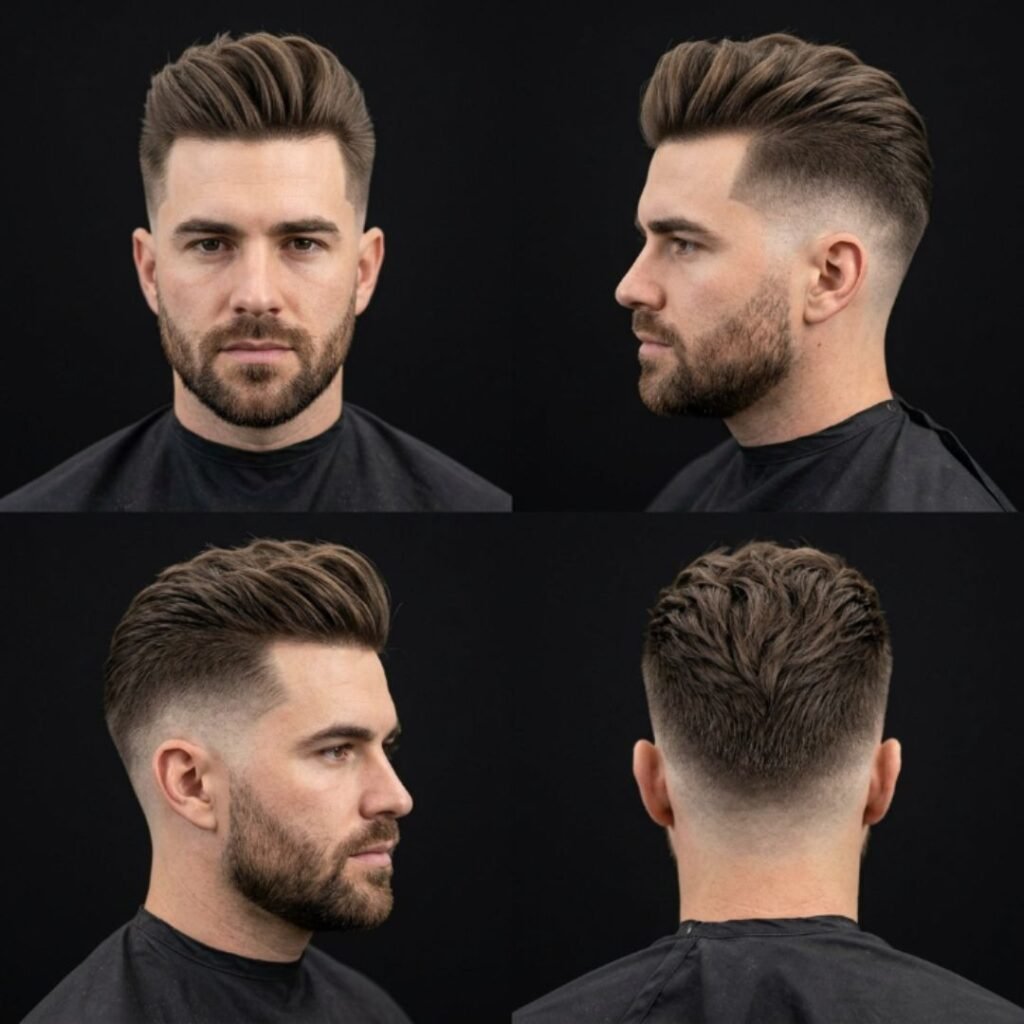
The quiff pushes top hair up and slightly back, creating a soft peak at the front without the height of a pompadour. It’s less formal than a slick back but sharper than a messy fringe, sitting right in the old money middle ground. This style suits guys with straight to wavy hair and an oval or heart-shaped face. Get a number 2 taper on the sides with 3 inches left at the front for lift. Blow-dry the front upward while applying a matte paste, and book a trim every 4 weeks.
Layered Medium Cut
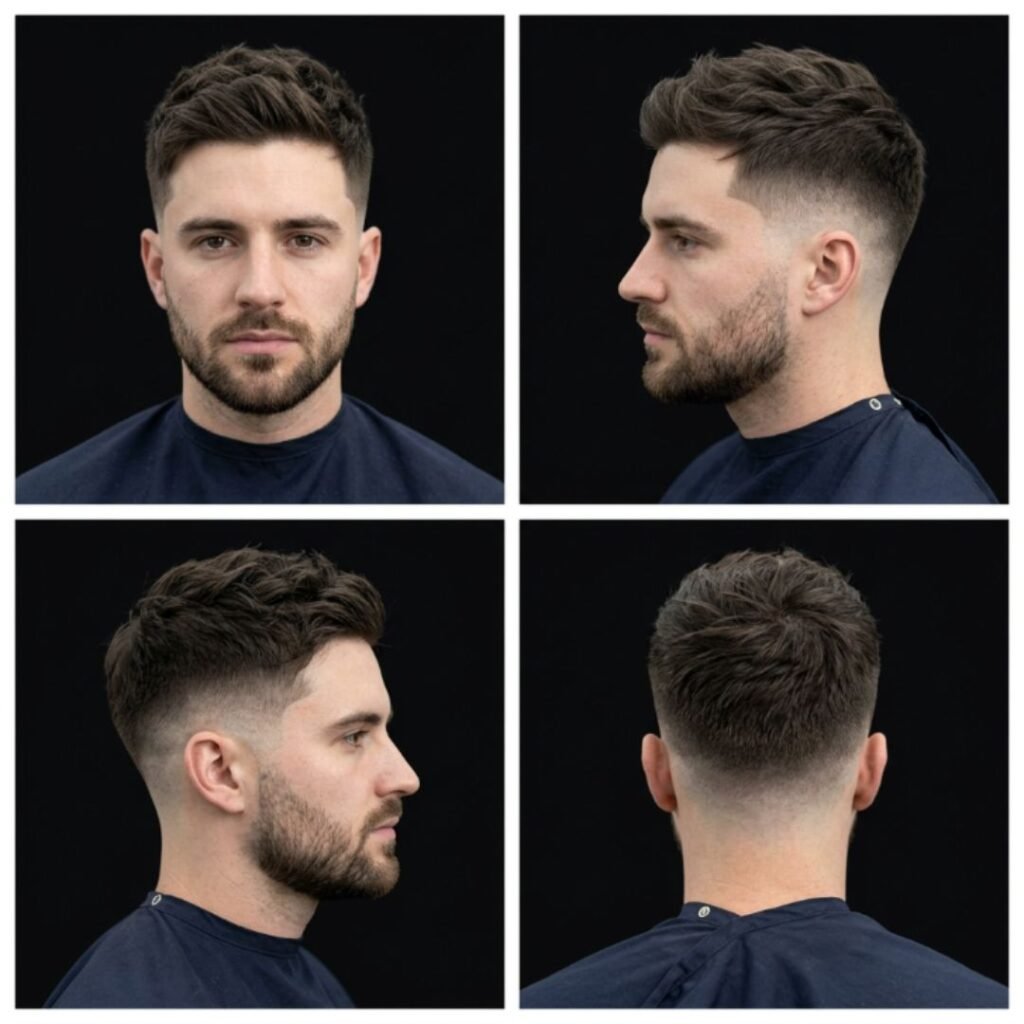
This is the layered cut’s medium-length cousin, keeping 3 to 4 inches all over with soft layering throughout. It differs from the shorter layered cut by giving more length to work with for side parts or loose waves. Guys with medium-thick, wavy hair get the best natural movement from this one. Barbers point-cut the ends rather than blunt-cutting, which softens the overall shape. Use a sea salt spray for texture and plan on a trim every 6 weeks since medium layers grow out slower.
Classic Comb Over
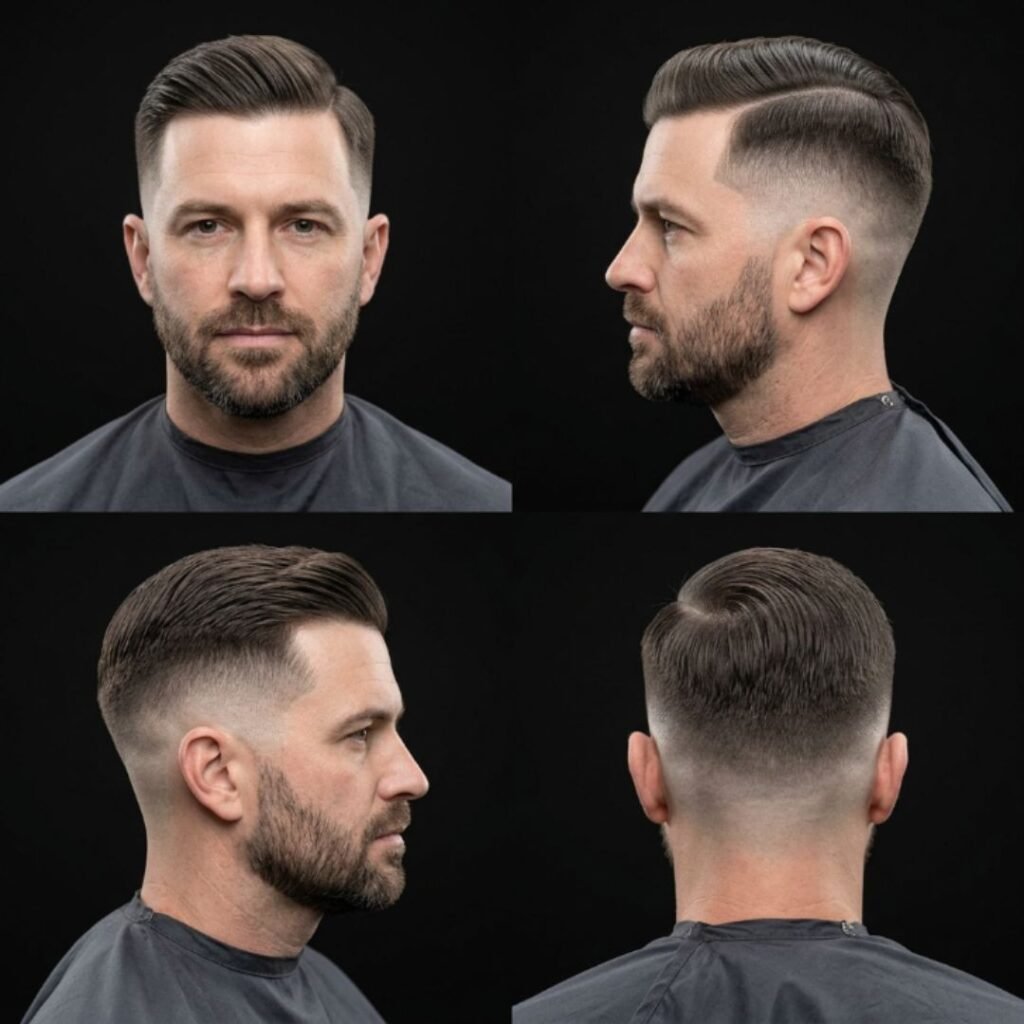
The comb over takes a side part and combs the longer side across the top, covering more scalp than a regular side part. This differs from a side swept style by using a more defined, straight part line instead of a soft diagonal one. It suits guys with fine or thinning hair since it strategically covers thinner areas up top. Ask for a number 2 fade on the sides with 3 to 4 inches on top for combing coverage. A fine-tooth comb and light-hold pomade give the cleanest line, and it needs a trim every 4 weeks.
Bro Flow
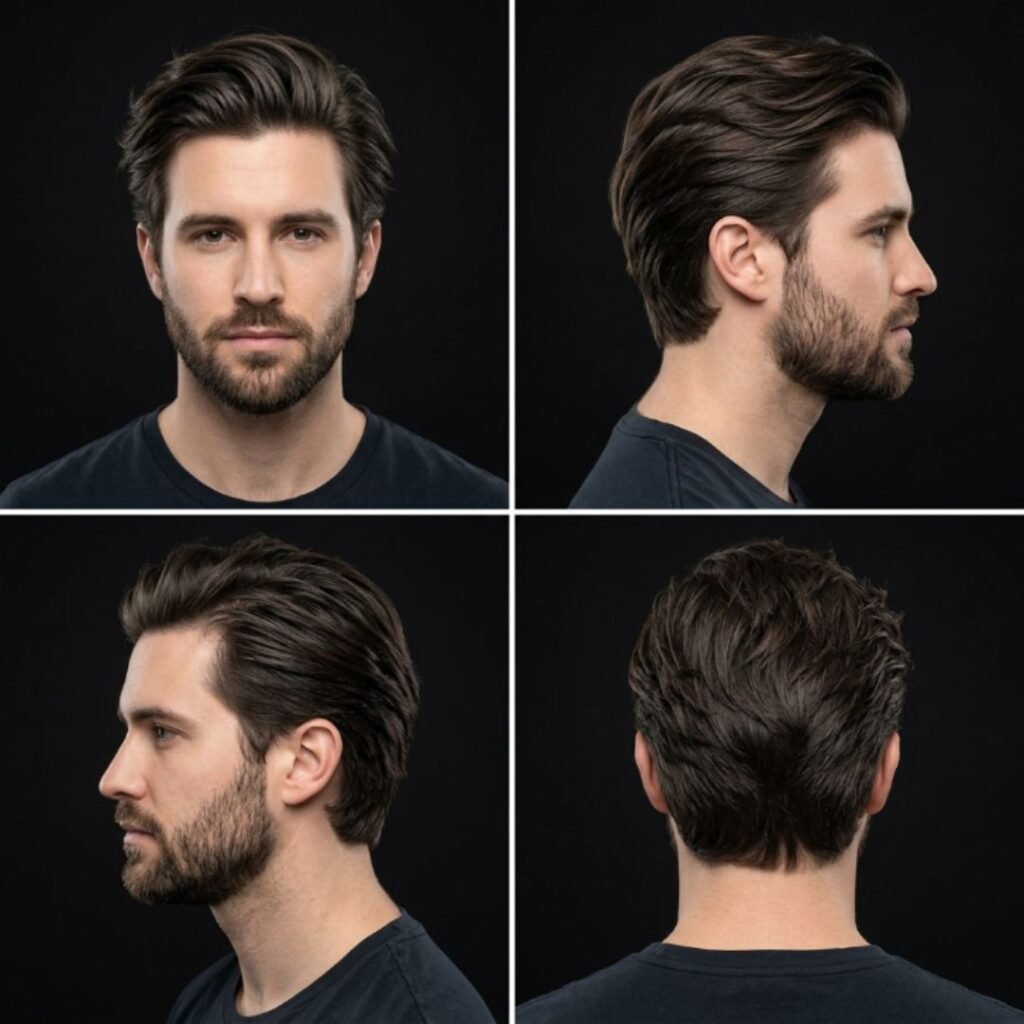
The bro flow lets top hair grow long and pushes it straight back without a hard part, landing somewhere between a slick back and a curtain cut. It stands apart by skipping the defined part entirely for a more natural, flowing look. This suits guys with straight to wavy hair who don’t want daily styling upkeep. Sides stay tapered short, around a number 2, while the top grows past 4 inches. A quick run of fingers through with a light cream is all the styling it needs, and trims happen every 8 weeks since length is the point.
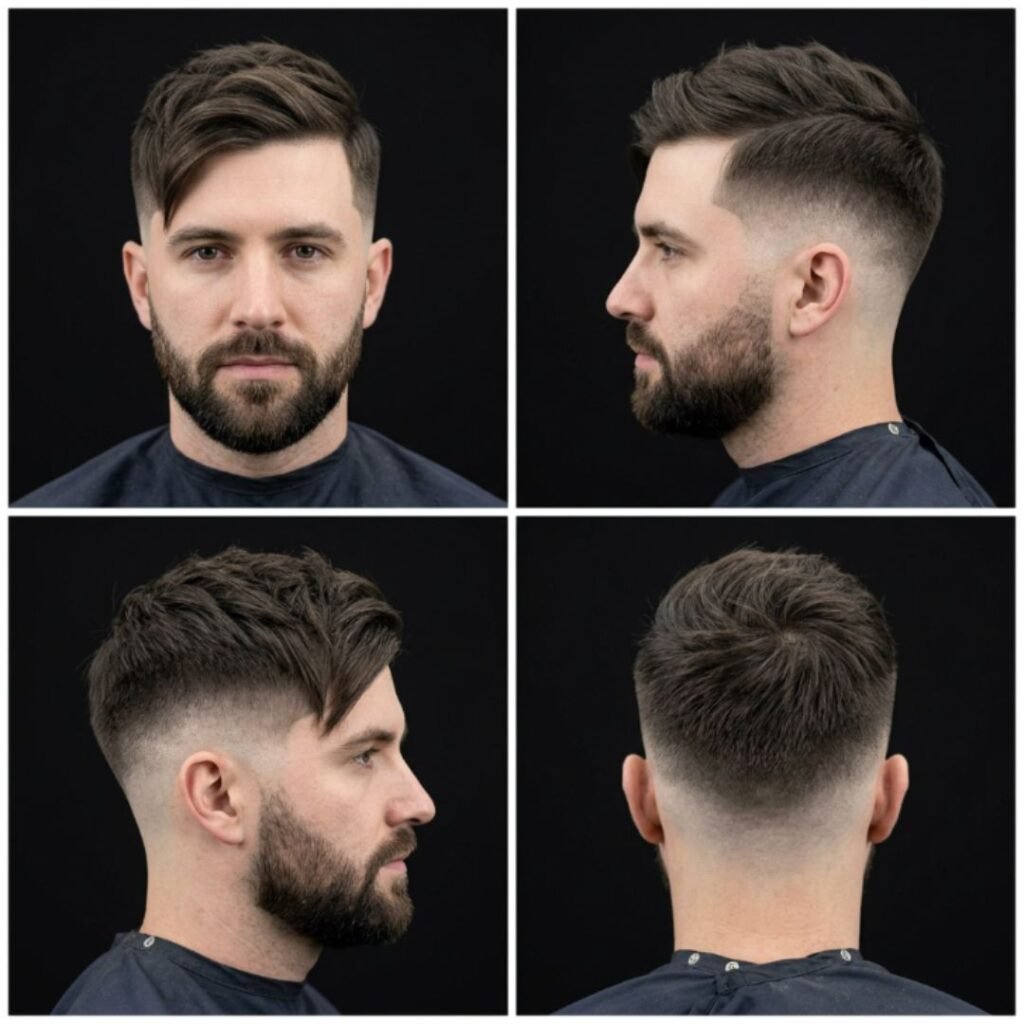
The side fringe sweeps top hair diagonally across the forehead instead of straight back or forward. It’s softer and more casual than a slick back, working well for a younger, prep-school version of the old money look. Guys with straight or slightly wavy hair get the cleanest fringe fall. Keep sides at a number 2 or 3 guard, with 3 inches on top left for the sweep. Blow-dry the fringe to the side with a light matte cream, and trim every 4 weeks to stop it falling in the eyes.
Classic Crew Cut
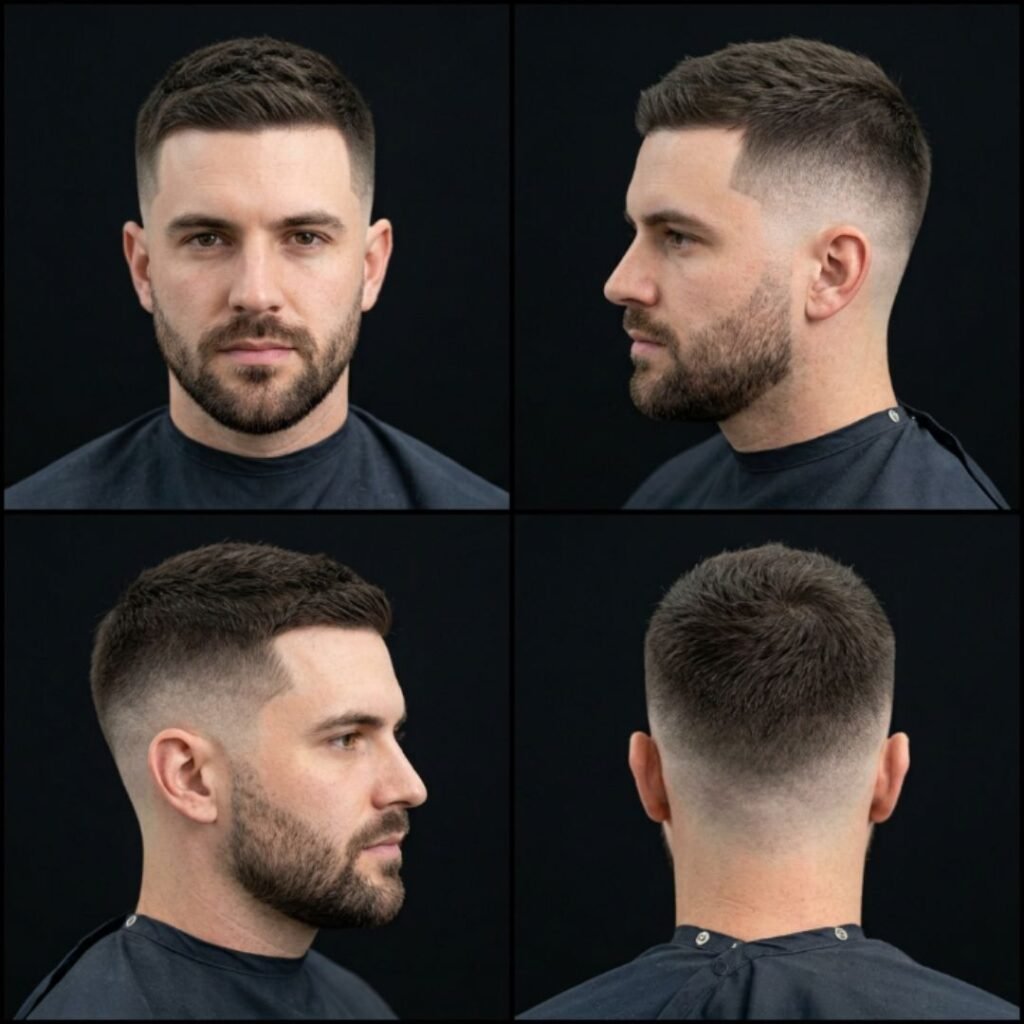
The crew cut is short and uniform, longer at the front and gradually shorter moving back, similar to a buzz cut but with more shape up top. It’s one of the lowest-maintenance old money cuts on this list. This style suits nearly any hair type and is especially good for guys with fine or thinning hair. Ask for a number 3 on top blending to a number 1 or 2 on the sides. It air-dries fine with zero product, and holds its shape for a full 4 to 5 weeks.
Classic Side Part
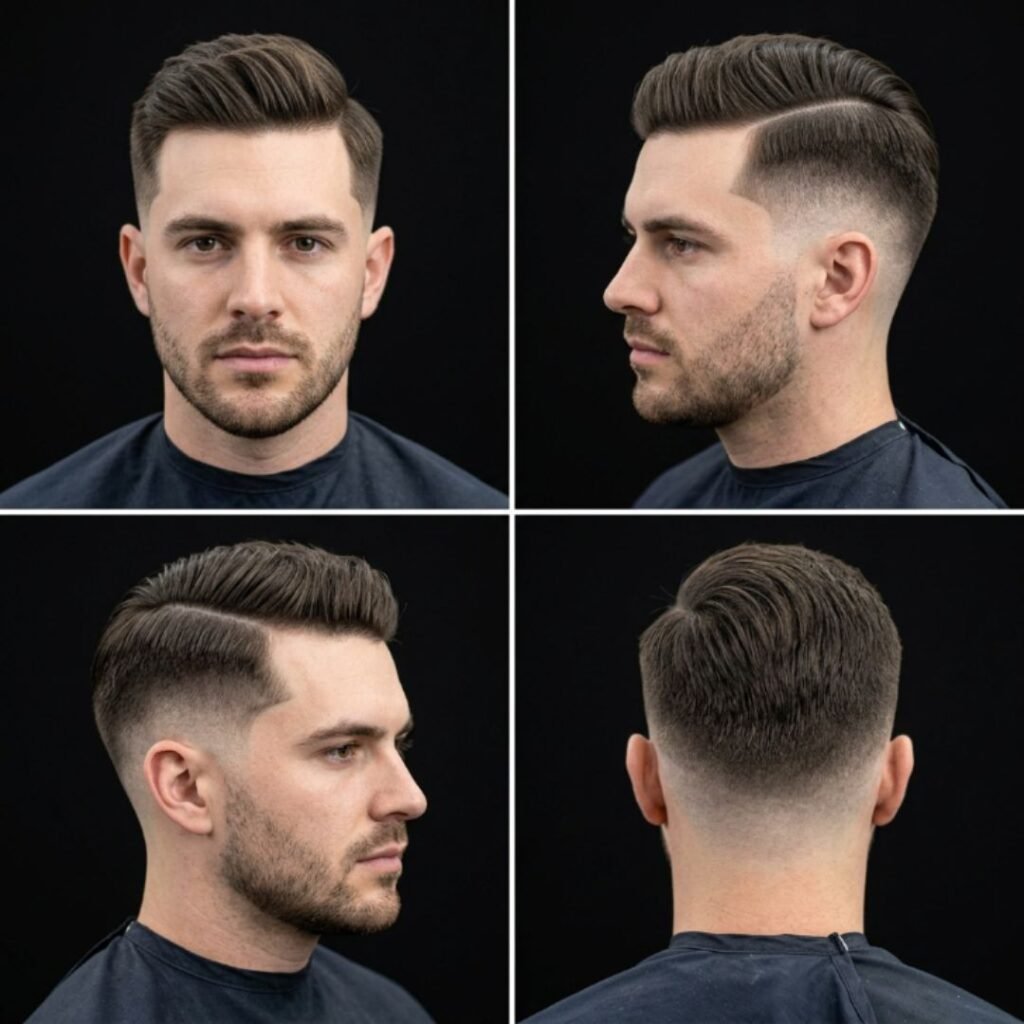
The classic side part uses a comb to create a hard, straight line on one side of the head, then combs hair across from the part. It’s more understated than a comb over, using less coverage and a cleaner, thinner part line. This works for almost any face shape and is the most common cut you’ll see in old money fashion editorials. Sides get a number 2 taper with 2 to 3 inches left on top. A fine comb and light pomade set the part each morning, and it needs a trim every 4 weeks.
Curtain Cut
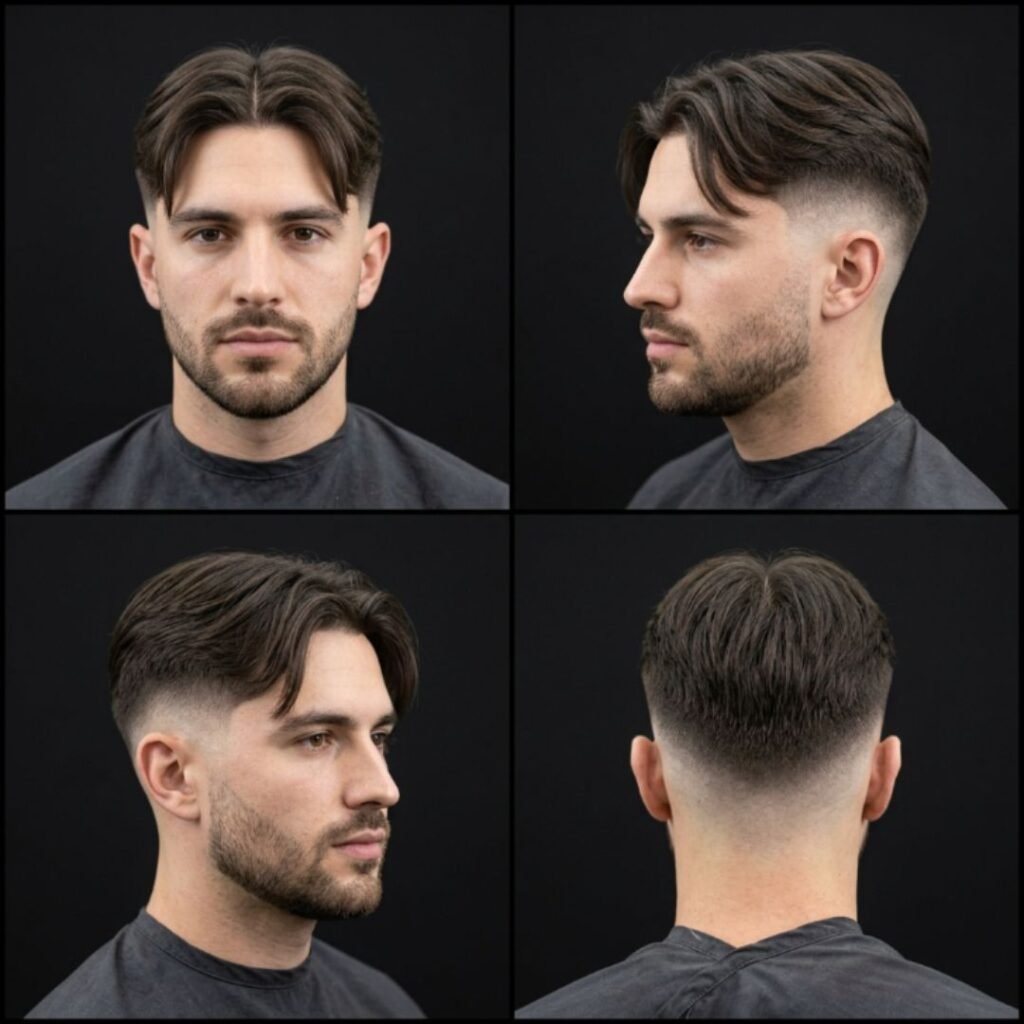
The curtain cut parts hair down the middle and lets both sides fall forward, framing the face like curtains on a window. Unlike side-swept styles, this one has no dominant side and works with a natural, center-grown pattern. It suits guys with straight to wavy medium-length hair and a longer face shape. Sides stay slightly longer than a taper, often just scissor-trimmed, with 4 or more inches left on top. A light sea salt spray brings out natural wave, and trims come every 6 to 8 weeks.
Scissor Cut
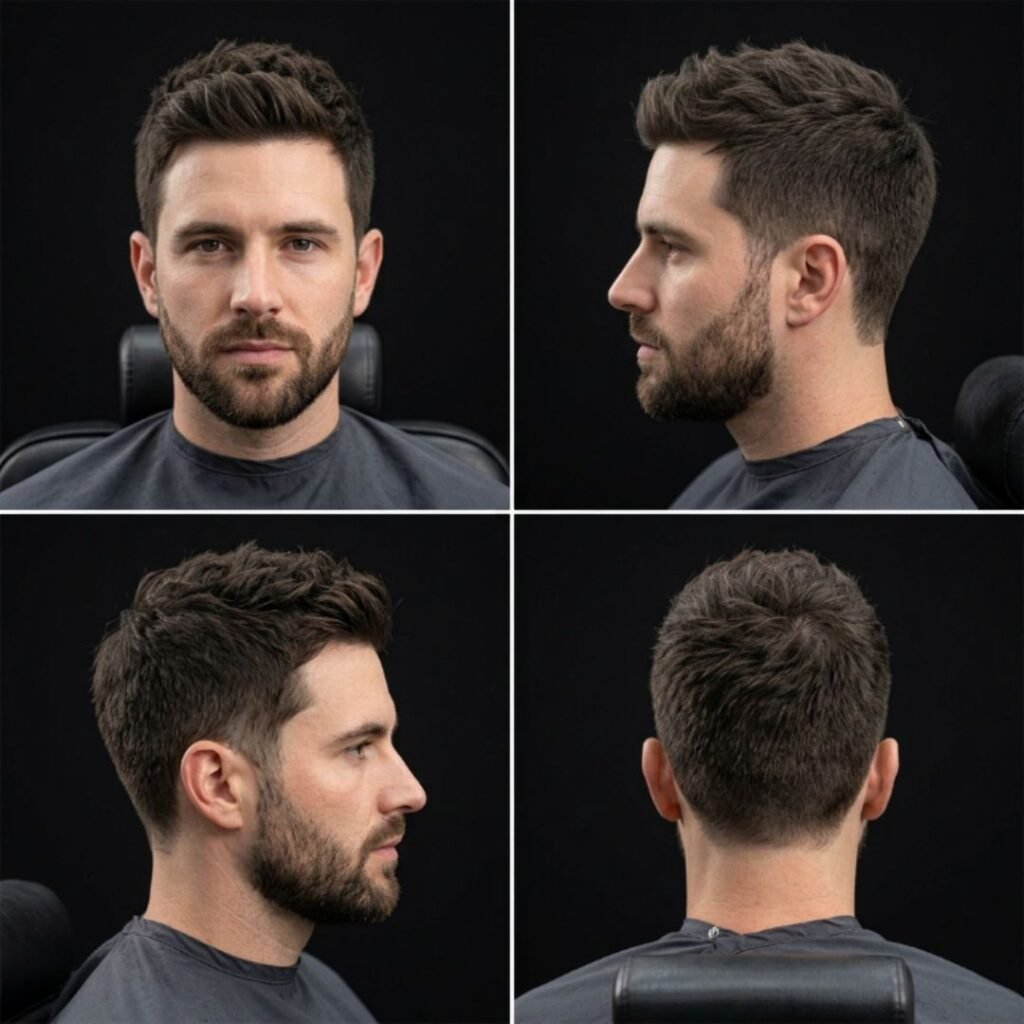
A scissor cut skips clippers almost entirely, using shears for a softer, less blunt finish than a machine fade. This gives a more textured, rounded edge that reads as effortlessly put-together rather than sharply lined. It suits thick or curly hair, since scissors blend curl patterns better than clippers do. Length varies, but most old money scissor cuts keep 2 to 3 inches throughout with point-cut ends. A light styling cream and finger-styling finish it, and it holds shape for about 5 weeks.
Brushed Back
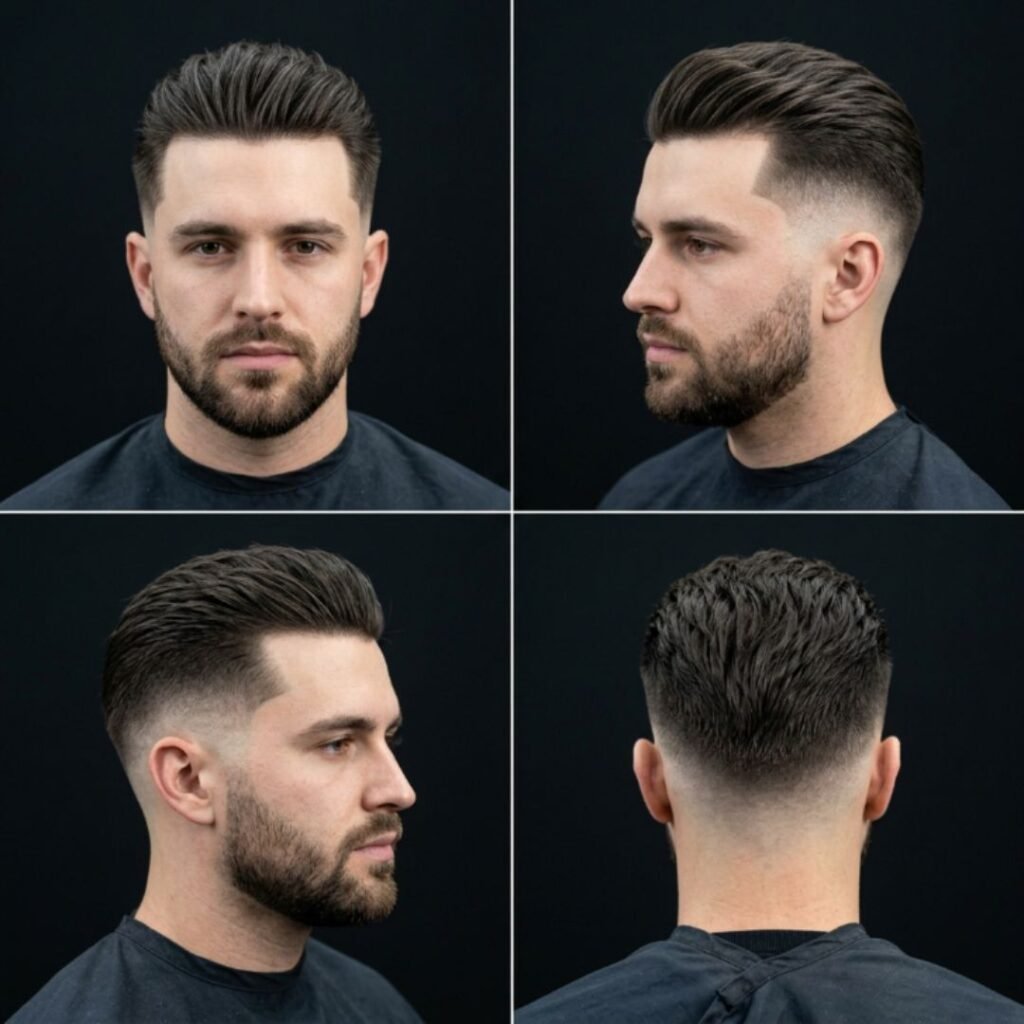
Brushed back styles use a boar-bristle brush instead of a comb to push top hair straight back, giving a softer, less rigid finish than a slick back. This differs from the slick back by skipping the high-shine, wet look for a more matte, textured finish. It suits guys with medium to thick hair who want the slicked shape without the glossy finish. Keep sides at a number 2 taper and leave 3 to 4 inches on top. Use a matte pomade and brush through while damp, then trim every 4 to 5 weeks.
80/20 Haircut
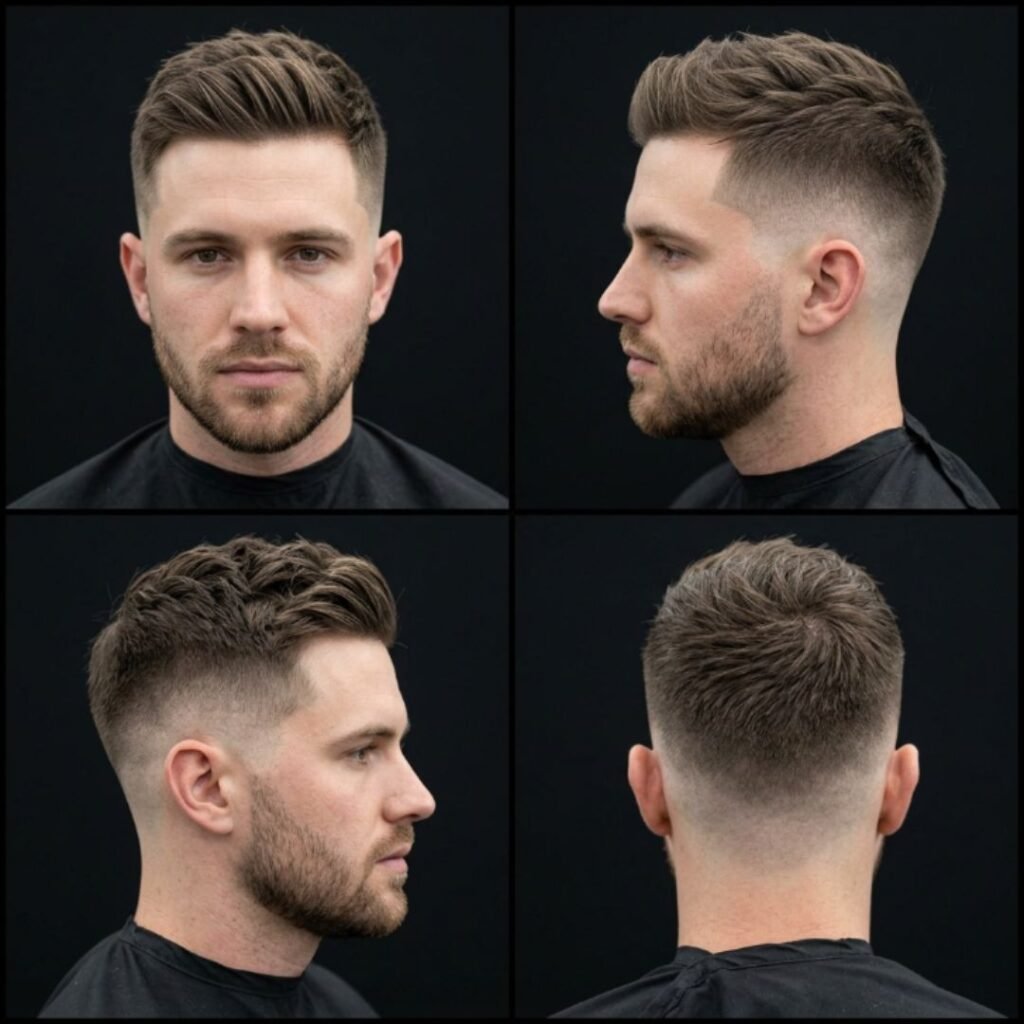
The 80/20 haircut splits the part so 80 percent of the hair falls on one side and 20 percent on the other, giving a more dramatic sweep than a standard side part. It differs from a classic side part by using an uneven split for a bolder, more editorial look. This works best on straight, medium to long hair that holds a deep part well. Ask your barber for a number 2 taper on the sides with 3 to 4 inches left on top. Set the deep part with a fine comb and light-hold gel, and trim every 4 to 5 weeks to maintain the ratio.
What Is an Old Money Hairstyle?
An old money hairstyle is a clean, classic haircut with short sides and a controlled top, styled with little to no visible product shine. It borrows from prep school, country club, and Ivy League culture from the mid-1900s. The look avoids trends like bold colors, shaved designs, or heavy texture, favoring a timeless, tailored appearance instead. Most old money cuts share three traits: a sharp part or clean sweep, tapered or faded sides, and a natural, matte finish.
How to Choose the Right Old Money Hairstyle
The right old money haircut depends on your face shape, hair type, and how much time you want to spend styling it each day. Getting these three things right means the cut looks intentional instead of just short.
Consider Your Face Shape
Round faces look sharper with height on top, like a quiff or pompadour, since added height elongates the face. Square faces suit softer styles like a side part or curtain cut, which balance out strong jawlines. Oval faces can wear almost any style on this list, including a French crop or classic taper. Long faces do best with a crew cut or Caesar cut, since shorter length keeps the face from looking stretched.
Know Your Hair Type
Straight hair holds sleek styles best, like a slick back or classic side part, since it lies flat naturally. Wavy hair works well with textured cuts like a layered cut or curtain cut that let the wave show. Curly hair suits a scissor cut or French crop, where curls add shape instead of fighting a straight line. Thin or fine hair looks fuller in shorter cuts like a crew cut or Caesar cut, since length can make thin hair look flat.
Match the Style to Your Lifestyle
If you work in an office, a classic taper, Ivy League cut, or side part keeps things professional with low daily upkeep. If you want a lower-maintenance option, pick a crew cut or Caesar cut that needs almost no styling. If you like spending a few minutes on your hair each morning, a pompadour or slick back rewards the extra effort with a sharper finish. Athletes or gym-goers usually do better with shorter styles that don’t need restyling after sweating.
How to Ask Your Barber for an Old Money Haircut
Ask your barber for a classic taper or Ivy League cut and specifically mention low-maintenance, tapered sides with a natural, matte finish on top. Being specific about guard numbers and length saves you from a cut that’s too short or too long.
Use the Right Terms
Say “taper” instead of “fade” if you want a more gradual, less aggressive blend on the sides. Give an exact guard number, like “a number 2 on the sides,” instead of vague terms like “short.” Mention “matte finish, no shine” if you don’t want a glossy or wet look after styling. Ask for “scissor work on top” if you want softer texture instead of a blunt, machine-cut edge.
Bring a Reference Photo
A photo removes guesswork better than any spoken description can, since barbers work visually. Save 2 to 3 photos from this list showing the length, part, and finish you want. Point out specific details in the photo, like where the part sits or how long the fringe is. Avoid celebrity photos with dramatically different hair density than yours, since the result won’t translate the same way.
Keep It Simple
Stick to one clear request instead of describing five different styles you like, which confuses the cut. Say the total time frame you’re willing to spend styling each morning so your barber can adjust length accordingly. Ask your barber to write down the guard numbers used so your next visit, or a different barber, can repeat the same cut. Simple, direct instructions get you the same reliable old money haircut every single time.
Also Read This Style: Low Fade Haircut: Stylish & Modern Men’s Styles 2026
FAQs
What is an old money haircut?
An old money haircut is a short, clean cut with tapered sides and a neat top, styled with little to no shine.
What haircut do rich guys get?
Rich guys usually get classic tapers, side parts, or crew cuts — simple styles that look sharp without trying too hard.
How do I ask for an old money haircut at the barber?
Ask for a classic taper or Ivy League cut with tapered sides and a matte, natural finish on top.
Is old money haircut the same as preppy haircut?
Yes, old money and preppy haircuts are basically the same — short sides, neat top, no bold colors or shaved designs.
What guard number is used for an old money haircut?
Most barbers use a number 2 or 3 guard on the sides, with 2 to 4 inches left on top.
Summary
An old money haircut comes down to short, tapered sides and a controlled, matte top — no shine, no shaved designs, nothing loud. Pick your style based on your face shape, hair type, and how much time you actually want to spend styling it. Bring a reference photo and use exact guard numbers so your barber nails it the first time. Once you find your version of the old money look, it’ll carry you from the office to a wedding without missing a beat.